
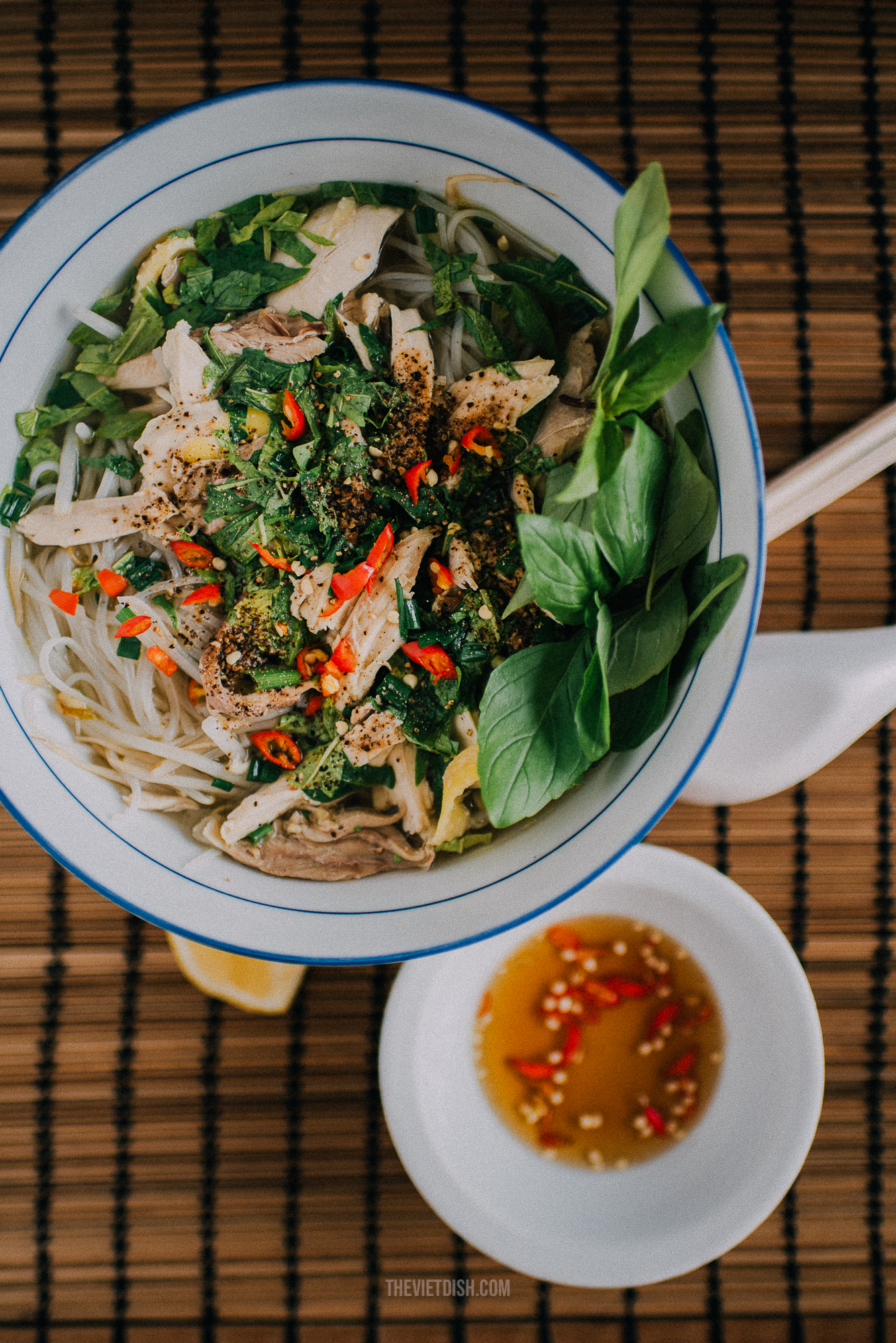
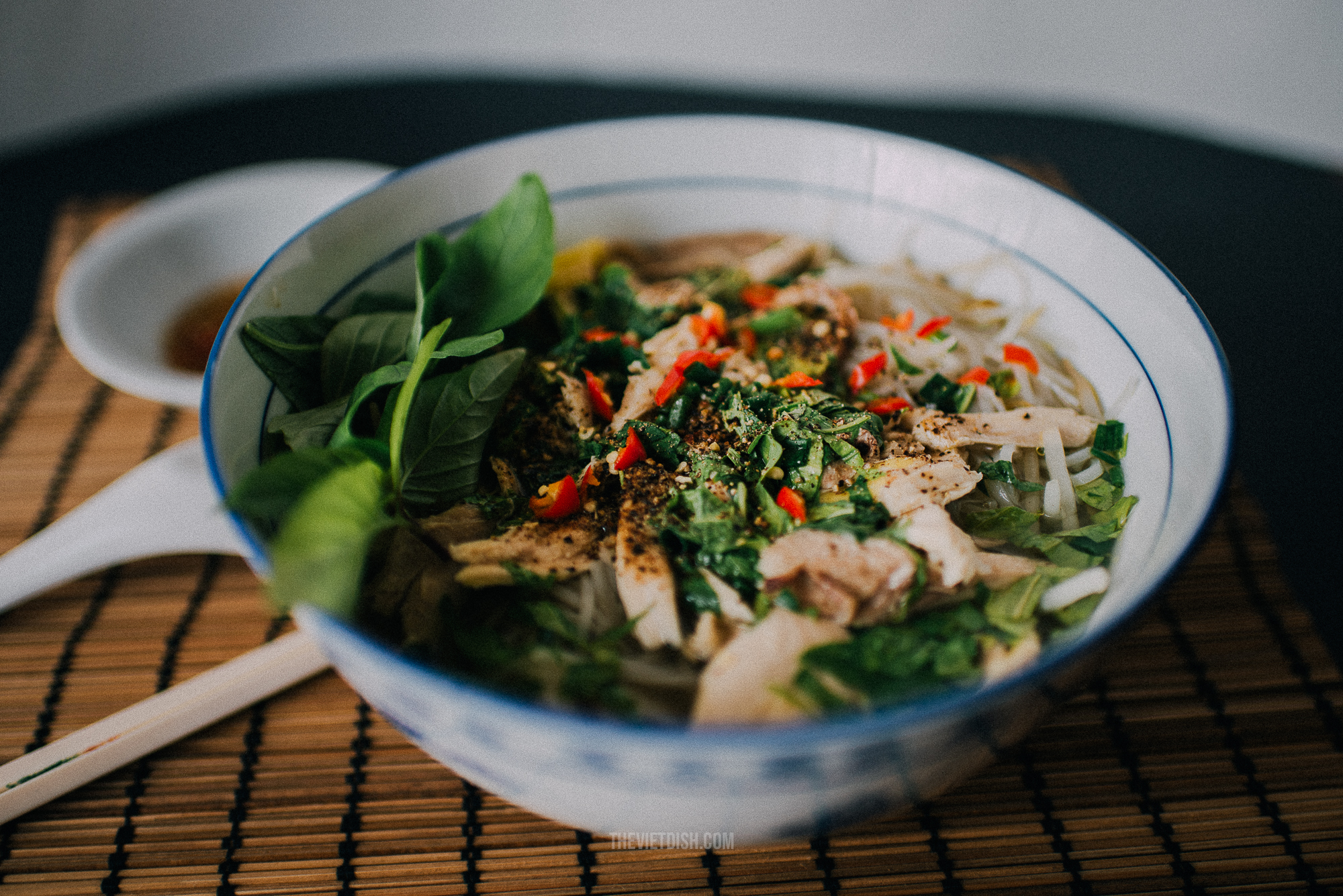
HOW TO MAKE VIETNAMESE CHICKEN PHO | PHỞ GÀ
For a lot of Viet Nam, pho is a very typical meal … like pizza! But here in America, pho is probably one of the most popular and well-known meals of Vietnamese cuisine. And like pizza, there are many ways to cook up a bowl of pho. Everyone has their own personal preferences, so each bowl of pho is going to taste slightly different than the last. But the most important part of the meal, and what makes each bowl of pho unique, is the broth.
I make it a goal to make sure my broth is sweet. My secret ingredient? Fruits. Sweet fruits, to be exact. Sweet fruits that won’t turn to mush when cooked. I usually have apples and Asian pears in my fridge, so those all go into the pot. You don’t need to I also don’t add too much seasoning to the broth. It’s perfectly okay—and actually, recommended—that the broth doesn’t taste “just right” for your taste buds. It’s okay that the broth is a bit plain. If you’re cooking for a group of people, everyone’s taste buds are going to differ. When it comes time to serve, that’s when each person’s individual seasoning preferences can be placed in their own separate bowl.
It’s also important to make sure the chicken is thoroughly clean before adding it to the pot. This recipe will have you wash the chicken twice. Once with vinegar and salt, and once more with boiled water. A well-cleaned chicken is going to ensure a clearer broth.
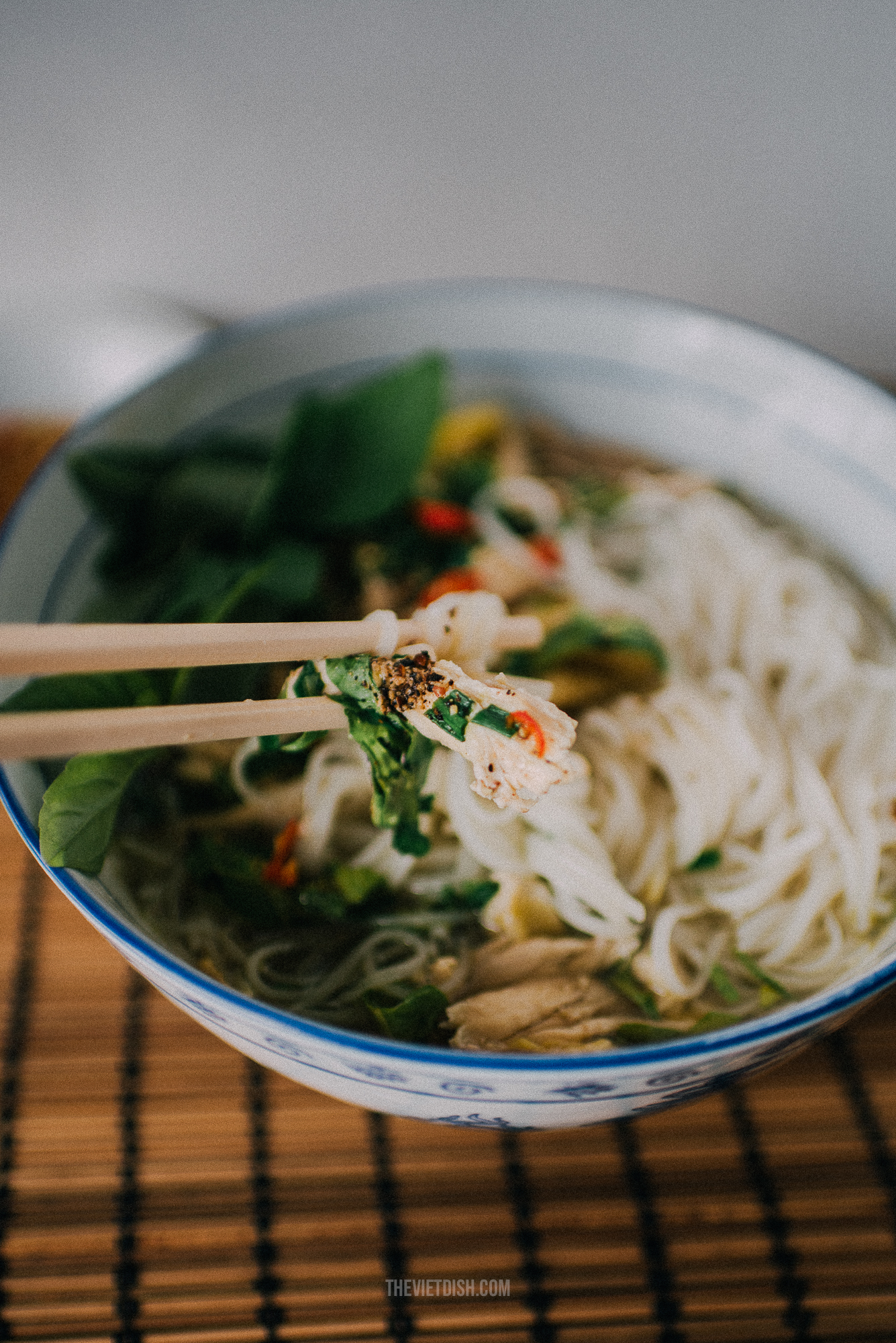
Just like the cold chicken recipe, you’ll want to use an empress/walking chicken for this recipe as well—use a chicken with little/no fat if possible. Most Vietnamese chicken pho you’ll find in America uses chicken meat that is knife-cut because it’s convenient to mass-produce. The “authentic” way to make Vietnamese chicken pho, though, is to actually tear or shred the chicken meat using your hands. Sometimes clean-cut isn’t always the best way to go about something…
If there is time between when the broth is finished cooking and serving, depending on the length of time, it’s alright to leave the broth on the stove at the lowest heat setting. This way, it’ll be faster to bring it to a soft boil before adding the broth to the noodles.
Speaking of the noodles—I’ve recently come up with a much quicker and efficient way to prepare the rice noodles. For the last few decades, to soften them, I would rinse the noodles and bean sprouts in boiling water. I recently experienced a few different techniques and a ziplock bag and microwave was the winner!
Vietnamese chicken pho is such a common meal in our household, that I’ve been making it for decades without actually ever knowing the exact measurements of any of the ingredients! This recipe took a long time to jot down because there are so many little steps. If you make this, please let me know if you have any questions!
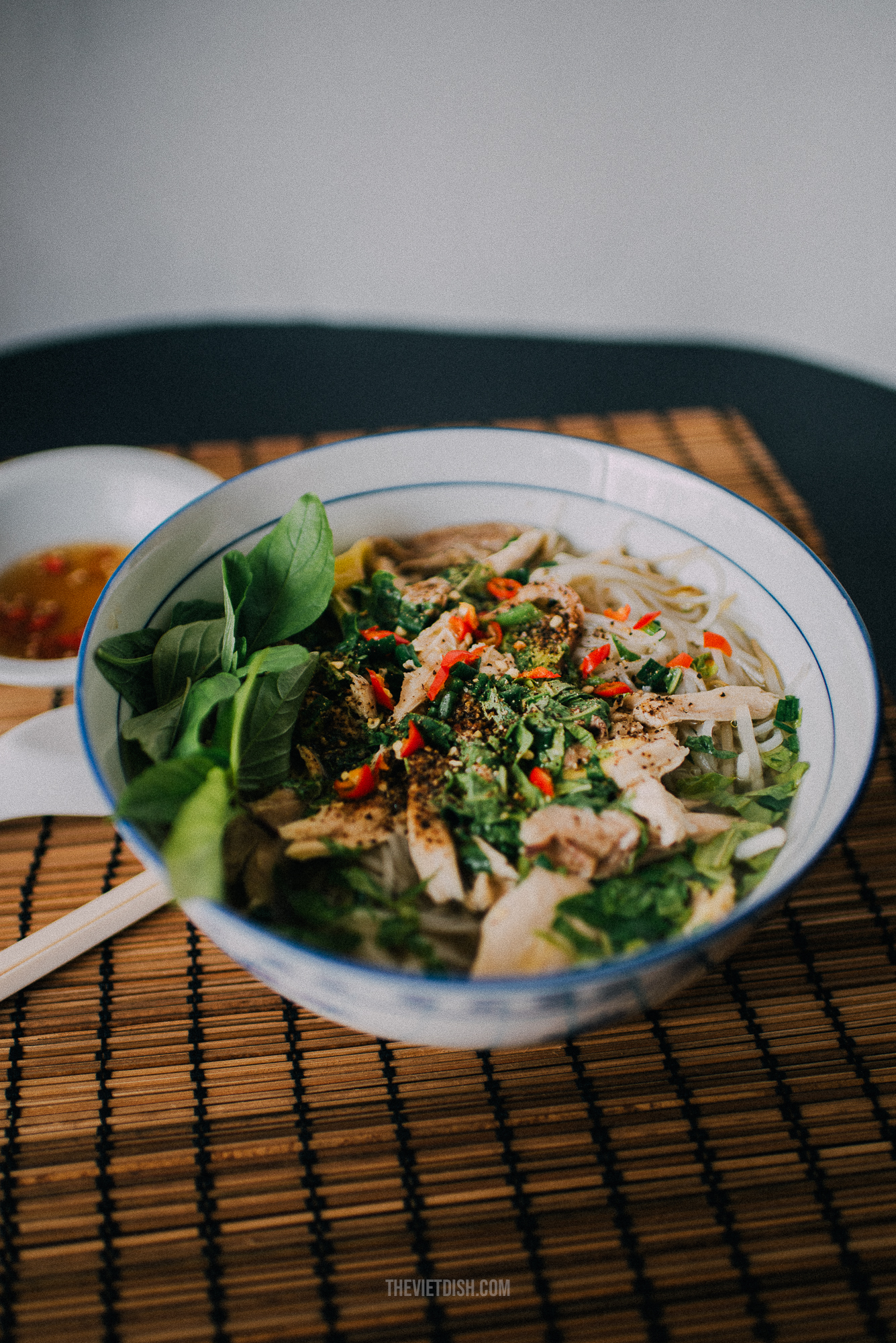 <
<
[penci_recipe]